
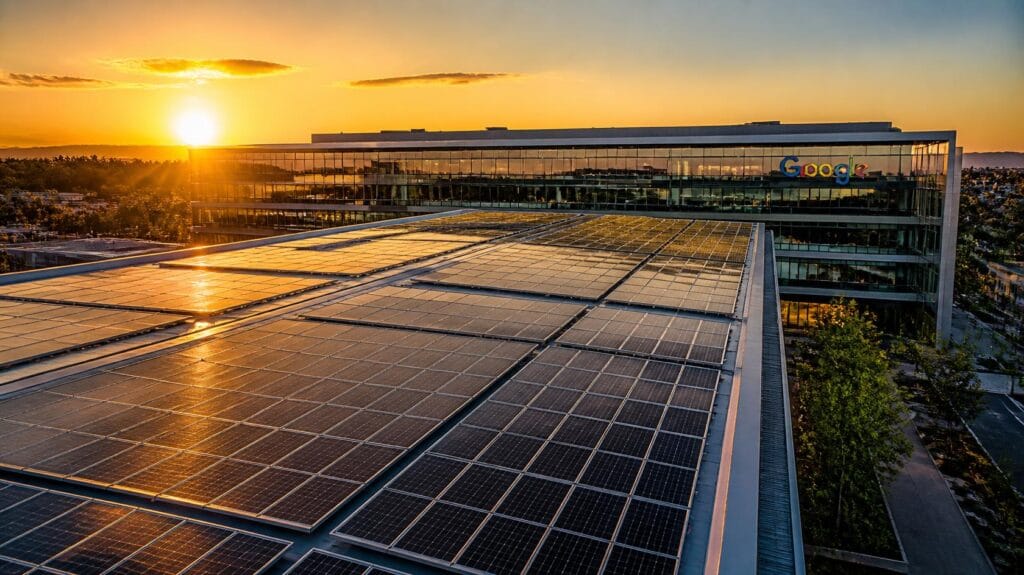
As commercial electricity rates continue their upward trajectory in 2026, corporate decision-makers are re-evaluating traditional utility expenses. A commercial solar power installation is no longer viewed merely as a corporate social responsibility (CSR) project—it is a strategic capital expenditure (CapEx) designed to lock in energy costs and boost long-term net operating income (NOI).
This comprehensive guide breaks down the financial modeling, tax incentives, ROI expectations, and installation steps for business owners, facility managers, and CFOs considering commercial solar in 2026.
💡 Executive Summary: The Financial Case for Commercial Solar
Investing in commercial solar panels converts a variable, unpredictable utility bill into a fixed, amortized asset.
- Average Internal Rate of Return (IRR): 12% – 25% (outperforming most low-risk corporate investments)
- Average Payback Horizon: 3 to 6 years
- First-Year Tax Offset: Up to 40%–50%+ of total project cost via federal and state incentives
- Warranted Asset Life: 25 to 30 years
📈 Commercial Solar Pricing & Cost Drivers in 2026
Commercial solar installations benefit significantly from economies of scale compared to residential systems. However, total turn-key costs vary depending on structural, electrical, and location-specific factors.
Average Turn-Key Installation Costs
+------------------------+-------------------+--------------------+--------------------+
| Facility Type          | System Size (kW)  | Gross Cost Range   | Net Cost (Post-ITC)|
+------------------------+-------------------+--------------------+--------------------+
| Small Office / Retail  | 50 kW - 100 kW    | $95,000 - $210,000 | $66,500 - $147,000 |
| Mid-Sized Warehouse    | 150 kW - 300 kW   | $270,000 - $540,000| $189,000 - $378,000|
| Large Industrial Plant | 500 kW - 1 MW+    | $750,000 - $1.4M+  | $525,000 - $980,000|
+------------------------+-------------------+--------------------+--------------------+
Key Factors Influencing Your Estimate
- Roof Condition & Structure: Roof-mounted systems require structural assessment to ensure weight capacity and membrane longevity.
- Interconnection & Transformer Capacity: Upgrading on-site transformers or switchgear to handle two-way power flow can add upfront engineering costs.
- Battery Energy Storage Systems (BESS): Pairing solar with commercial battery storage helps mitigate expensive peak demand charges, improving overall ROI in high-tariff states like California or New York.
🏛️ Maximizing Federal Tax Incentives in 2026
Tax strategy plays a crucial role in lowering the barrier to entry for commercial solar installations.
1. The 30% Federal Investment Tax Credit (ITC)
The federal ITC allows businesses to claim a 30% credit against their tax liability for the tax year in which the commercial solar system is placed in service.
- Bonus Adders: Projects located in energy communities, low-income areas, or those fulfilling domestic content thresholds may qualify for an additional 10% to 20% bonus credit.
2. MACRS 5-Year Depreciation & Bonus Depreciation
Under the Modified Accelerated Cost Recovery System (MACRS), commercial solar infrastructure is classified as 5-year property.
- Businesses can write off a substantial portion of the system’s basis in Year 1.
- Combining MACRS with the 30% ITC dramatically increases first-year cash flow.
💳 3 Ways to Fund Your Commercial Solar Installation
Choosing the right financing model determines whether the installation impacts your balance sheet or operates off-balance-sheet.
1. Capital Purchase (Cash)
- Best for: Companies with strong liquidity seeking maximum long-term ROI.
- Benefits: 100% asset ownership, full retention of ITC tax benefits, and highest overall lifetime savings.
2. Commercial Solar Loans
- Best for: Businesses wanting to maintain cash reserves while owning the equipment.
- Benefits: $0-down options allow monthly loan payments to be offset by utility savings from Day 1.
3. Power Purchase Agreement (PPA) or Solar Lease
- Best for: Tax-exempt organizations, non-profits, or corporations preferring no balance sheet liability.
- Benefits: A third-party developer owns, operates, and maintains the system. You simply buy the generated electricity at a discounted, predictable rate per kWh.
⚙️ The Commercial Solar Installation Process: Step-by-Step
A smooth installation process minimizes downtime and ensures grid compliance:
- Feasibility Study & Utility Bill Analysis: Evaluating peak demand usage, roof geometry, and local solar irradiance.
- Engineering & Custom System Design: CAD layouts, structural engineering, and electrical schematic reviews.
- Permitting & Utility Interconnection Approval: Securing local building permits and net metering agreements with the utility.
- Procurement & Construction: Mounting hardware, inverter installation, string wiring, and module placement.
- Commissioning & Permission to Operate (PTO): Final inspection by local authorities and utility grid synchronization.
❓ Frequently Asked Questions (FAQ)
How long does a commercial solar power installation take?
While physical construction takes 2 to 6 weeks, the entire process—including engineering, permitting, and utility PTO—typically takes 3 to 6 months.
How do solar panels affect commercial roof warranties?
Reputable installers use non-penetrating ballast mounts or certified flashing systems that maintain roof warranty integrity. Inspecting the roof prior to installation is mandatory.
🎯 Conclusion & Financial Takeaway
A commercial solar installation transforms a major operating cost into an income-generating asset. With federal tax credits covering at least 30% of gross capital expenditures, 2026 remains an optimal period for commercial energy independence.