
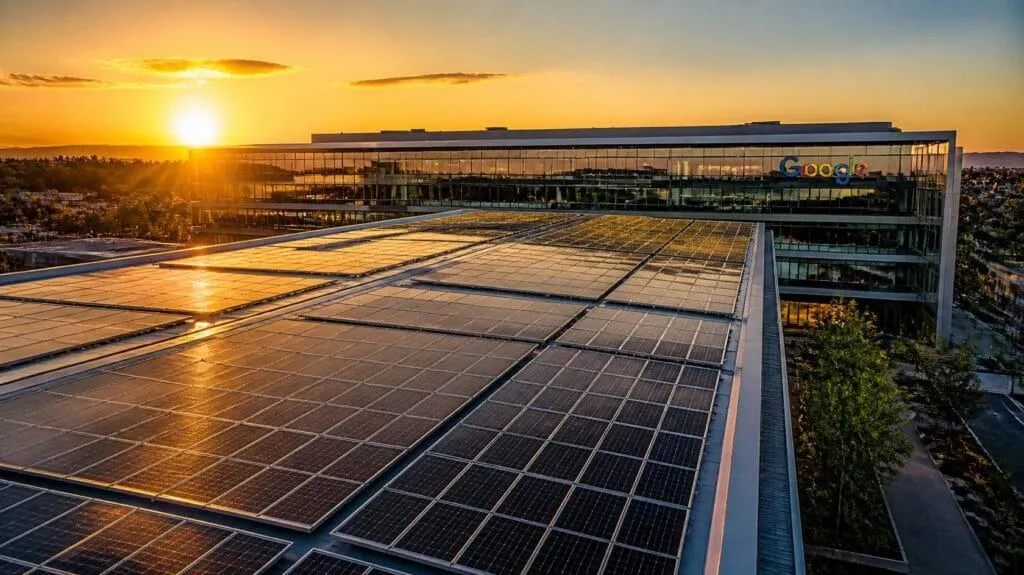
Commercial solar installation cost in 2026 should be compared on a dollars-per-watt basis, with the full electrical and interconnection scope stated in writing. The U.S. Department of Energy (DOE) reports a modeled market price of $1.98 per watt DC ($/Wdc) for its representative 250 kWdc commercial rooftop PV-only system in Q1 2025. That implies $495,000 before owner incentives, in 2024 U.S. dollars. This is a published model benchmark, not a nationwide average contractor quote for 2026. Actual prices vary with location, roof conditions and utility requirements.
There is an equally important tax change: federal Section 48E does not promise every business a 30% investment tax credit. The usual base rate is 6%, while a 30% rate may apply to qualifying projects. New wind and solar eligibility deadlines enacted in 2025 also matter. The numbers below are planning examples, not a binding offer, tax opinion or guaranteed return.
Commercial Solar Installation Cost: Price per Watt
Use gross installed project cost divided by the solar array’s DC nameplate wattage. For example, a hypothetical $220,000 quote for a 100 kWdc system equals $2.20/Wdc. A $495,000 project with 250 kWdc of modules equals $1.98/Wdc. Always compare quotes using the same Wdc or Wac denominator.
- 100 kWdc at an illustrative $2.20/Wdc: $220,000 gross installation cost.
- 250 kWdc at the DOE Q1 2025 commercial PV-only benchmark $1.98/Wdc: $495,000, before owner incentives.
- 500 kWdc at an illustrative $2.20/Wdc: $1,100,000 gross installation cost.
The 100 kW and 500 kW figures are math scenarios, not measured national price ranges. DOE’s 250 kW figure represents a specific modeled school-rooftop design. It does not include a battery, and its $1.98/Wdc modeled market price uses 2024 dollars. For the separate unit-pricing question, see Commercial Solar Cost Per Watt in 2026.
What Is Included in a Commercial Solar Quote?
The price of panels alone is not the installed price. Ask the contractor to identify the full scope of work and every allowance or exclusion. A roof-mounted system can require structural engineering, racking, inverters, DC wiring, AC feeders, disconnects, protective equipment, metering, inspections, commissioning and monitoring.
- Roof and structural work: existing roof condition, loading, attachment method, water sealing and access.
- Electrical distribution: switchgear, breakers, transformer capacity, protective devices, feeder routing and planned shutdowns.
- Utility connection: application, study fees, export limits, metering and potential service or distribution upgrades.
- Project execution: labor, crane access, permits, safety requirements, warranties and maintenance responsibilities.
- Storage: if a battery is proposed, price it separately from the PV-only array and evaluate its own capacity and economics.
An apparently cheap quote can become expensive if substantial grid work is excluded. Our commercial solar interconnection cost guide explains how utility studies and upgrades can affect the final budget.
Can a Business Still Claim a 30% Solar Tax Credit in 2026?
Section 48E, the clean electricity investment credit, is generally based on a taxpayer’s eligible investment, not an automatic rebate from the installer. The standard credit rate is 6%. A 30% rate can be available when specified conditions are satisfied, including qualifying projects with maximum net output under 1 MWac or projects meeting applicable prevailing-wage and registered-apprenticeship rules. Other requirements, including eligible basis, ownership and applicable restrictions, must also be considered.
Construction start and placed-in-service deadlines
The 2025 federal law introduced a termination rule for applicable wind and solar facilities: if construction begins after July 4, 2026 and the facility is placed in service after December 31, 2027, the Section 48E credit generally does not apply to that facility. Both dates matter. An eligible earlier start can result in a different outcome, while a project starting after the deadline needs to evaluate the end-of-2027 placed-in-service date.
The construction-start test is not merely the date on a sales contract. IRS Notice 2025-42 generally requires a Physical Work Test. A limited five-percent safe-harbor method is available under the notice for qualifying low-output solar facilities with maximum output no greater than 1.5 MWac. Rules on prohibited foreign entities and material assistance can also affect projects that start construction in 2026. Confirm the applicable facts with a U.S. tax adviser; do not promise a credit before eligibility is verified.
6% versus 30%: a transparent example
For an illustrative $495,000 cost that is also assumed, purely for this calculation, to equal the eligible tax basis, a 6% credit would calculate to $29,700; a 30% credit would calculate to $148,500. Neither amount is a guaranteed benefit. Actual qualified basis, the applicable credit rate, ability to use or transfer a credit, other incentives and timing can change the owner’s economic result. Do not subtract $148,500 from a commercial solar quote unless the project actually qualifies.
How Much Can Commercial Solar Save Per Year?
Calculate solar economics from a facility’s actual electricity tariff, monthly load profile and production estimate. Annual solar kWh are not automatically worth the full retail electricity price: exports may receive a different rate, peak demand charges may remain and production will vary by location and season.
Illustrative 250 kWdc project: no promised payback
Suppose a 250 kWdc system produces 1,200 kWh per kWdc annually (an assumption, not a DOE output forecast). Annual generation is 300,000 kWh. At an assumed blended value of $0.13 per useful kWh, the gross avoided energy value is $39,000 per year. DOE’s PV-only benchmark models annual operations and maintenance at approximately $40 per kWdc, or $10,000 per year for this system. That leaves about $29,000 before financing, tax, degradation and other costs. Dividing the $495,000 gross benchmark price by $29,000 gives a simple, pre-credit payback of approximately 17.1 years in this specific scenario.
This is not a statement that commercial solar normally takes 17 years—or three to six years—to pay back. Site-specific prices, solar generation, avoided energy rates, incentive eligibility, O&M and contract structure can all change the outcome. For the demand-charge side of the calculation, see Commercial Electricity Bills Explained.
Should You Buy, Finance or Sign a Commercial Solar PPA?
- Cash purchase: the owner pays the project cost and evaluates operation, financing alternatives and any qualified owner-level tax benefit.
- Solar loan: project ownership may stay with the borrower, while interest and debt service affect cash flow.
- Power purchase agreement (PPA): a third-party owner usually owns the system and sells its power under contract. The host should not assume it claims the third-party owner’s tax credit.
A fixed price, annual escalation clause, roof-access terms, production guarantee and termination conditions can matter more than the headline $/W number. Compare the approaches in our Commercial Solar PPA vs. Purchase guide.
Commercial Solar Contractor Quote Checklist
- State the array’s kWdc, inverter kWac, module layout and expected annual kWh.
- Show total gross price and $/Wdc, with equipment specifications and warranty responsibilities.
- Identify service upgrades, switchgear, transformers, wiring, protection studies and utility interconnection costs.
- Document site assumptions: roof age, structural limits, work access, permits, inspections and estimated completion date.
- Price batteries and other optional work separately; disclose exclusions and contingencies.
- Show the financial case with and without federal tax incentives and distinguish verified credits from assumptions.
- Show downside cases for lower annual production, higher installed cost and changing utility electricity values.
Related reading: choosing a commercial solar contractor.
Bottom Line
The DOE’s $1.98/Wdc commercial PV-only model for a 250 kWdc rooftop is a grounded reference point, not a universal 2026 installed price. Compare bids on a consistent capacity basis, verify the full electrical and utility scope, and confirm Section 48E eligibility before projecting savings. Specific, transparent calculations are more useful than an unsupported nationwide cost range or a guaranteed 30% credit and three-to-six-year payback.
About the Author
JHOTAS-LAB draws on practical electrical-construction and project-coordination experience in South Korea. U.S. energy guides are researched against official U.S. agency publications and applicable manufacturer or utility documents. This article is general project-planning information and not professional U.S. tax, legal or engineering advice.
Sources & Official References
- U.S. Department of Energy — Q1 2025 PV System Cost Benchmarks
- IRS Notice 2025-42 — Solar Construction-Start Requirements
- IRS — Clean Electricity Investment Credit, Section 48E
- IRS — Form 3468 Instructions
- IRS — 2026 Guidance on Prohibited Foreign Entity Material Assistance
Official sources reviewed October 20, 2026. Verify subsequent guidance and project-specific rules before relying on figures.
Is there something you’d like to see?
Suggest an electrical topic, practical guide, or calculator you would like to see on JHOTAS-LAB. Your suggestion may help shape future content.