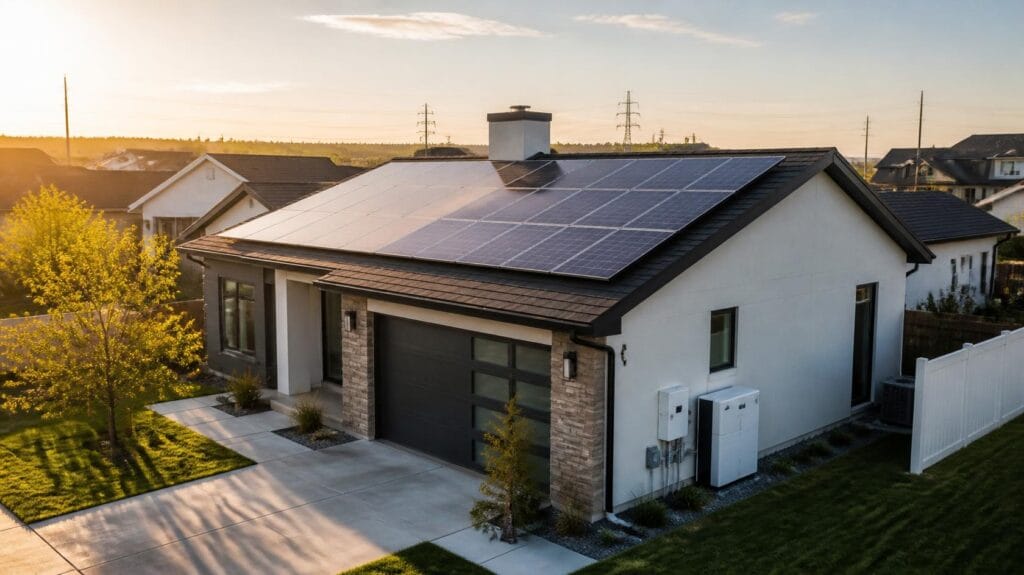

The average residential solar system in the U.S. costs about $2.60 per watt in 2026, before state or local incentives.
According to EnergySage marketplace data, the typical home solar system is now around 12 kW and costs approximately $31,135 before incentives. Quoted prices for a typical 12 kW system range from roughly $27,500 to $33,900.
That means a rough 2026 price estimate looks like this:
| Solar system size | Approx. cost at $2.60/W |
|---|---|
| 6 kW | $15,600 |
| 8 kW | $20,800 |
| 10 kW | $26,000 |
| 12 kW | $31,200 |
But those numbers are only a starting point.
Your actual solar installation cost can change significantly depending on your state, roof, equipment, electrical system, installer, financing method, and whether you add battery storage.
What Is the Average Solar Cost Per Watt in 2026?
The easiest way to compare solar quotes is usually cost per watt.
EnergySage reports an average residential quoted price of approximately:
$2.60 per watt before incentives
in 2026.
So if an installer quotes a 10 kW system:
10,000 watts × $2.60/W = approximately $26,000
That does not mean $2.60/W is the correct price everywhere.
Solar prices vary by state, local labor costs, permitting requirements, equipment, roof conditions, and installer competition.
But cost per watt gives homeowners a much better comparison than simply looking at the final dollar amount.
A $24,000 system may sound cheaper than a $30,000 system—but not if the first system is 7 kW and the second is 12 kW.
How Much Does a 10 kW Solar System Cost?
At the current national average, a 10 kW residential solar system would cost roughly $26,000 before incentives.
A system this size may be appropriate for a home with relatively high electricity consumption, but homeowners should not choose system size based solely on what fits on the roof.
The Department of Energy recommends considering your actual electricity consumption, roof orientation, shading, solar production, utility electricity rates, and compensation for excess electricity sent back to the grid.
A smaller system that offsets expensive electricity efficiently may make more financial sense than a large system that exports substantial power at a poor utility rate.
What About the 30% Federal Solar Tax Credit?
This is one of the biggest differences between solar pricing in 2025 and 2026.
For a new homeowner-owned residential system installed in 2026, the former 30% Residential Clean Energy Credit is no longer available.
The IRS states that the Section 25D residential clean-energy credit does not apply to qualifying expenditures made after December 31, 2025. The credit rate had been 30% for qualifying property installed from 2022 through 2025.
That means a homeowner considering a $30,000 solar project in 2026 should not automatically subtract $9,000 the way older solar articles often do.
State, local, or utility incentives may still exist, but they vary by location.
This makes the actual installation price more important in 2026.
Why Can Two Solar Quotes Be Thousands of Dollars Apart?
Solar panels themselves are only one part of the project.
A complete residential solar installation can include:
- Solar modules
- Inverters or microinverters
- Racking and roof attachments
- Wiring and electrical equipment
- Installation labor
- Engineering
- Permitting
- Inspection
- Utility interconnection
- Sales and administrative costs
The Department of Energy calls many of these non-hardware expenses “soft costs.”
DOE notes that permitting, financing, installation, customer acquisition, and company overhead make up a significant portion of what homeowners ultimately pay for residential solar.
This is why simply checking the retail price of solar panels online tells you very little about the cost of a complete rooftop system.
Your Roof Can Change the Installation Price
A simple roof is generally easier to work with than a complicated one.
Cost can increase when a home has:
- Multiple roof sections
- Steep roof slopes
- Difficult access
- Heavy shading
- Structural issues
- An aging roof
- Long electrical wiring routes
DOE recommends evaluating roof condition, orientation, slope, and shading before deciding on a system.
If your roof needs replacement in the near future, I would evaluate that before installing panels.
Removing and reinstalling a solar array later adds another layer of work and cost.
Does the Electrical Panel Affect Solar Cost?
It can.
Solar power ultimately has to connect into the home’s electrical system.
Depending on the existing equipment and system design, additional work may be required around:
- Main electrical panel
- Breakers
- Disconnects
- Grounding and bonding
- Wiring
- Meter equipment
- Utility interconnection
DOE notes that residential solar connects to the home’s main electrical panel and must meet specific electrical, labeling, and utility interconnection requirements.
So when comparing quotes, I would check whether the price includes all required electrical work, rather than assuming the solar panels are the entire project.
How Much Does Adding a Solar Battery Cost?
Battery storage can change the project price dramatically.
EnergySage’s 2026 data shows that a typical home battery installation costs approximately $15,647 before incentives, based on about 13.5 kWh of storage.
So a rough example might look like:
12 kW solar system: about $31,000
Home battery: about $15,650
Combined: roughly $46,000+ before applicable incentives
This is why I would evaluate solar and battery storage separately.
A battery can provide backup power and may improve solar self-consumption where export compensation is poor, but it is not automatically financially worthwhile for every home.
Cash Price vs. Solar Loan Price
Another mistake is comparing only the monthly payment.
A solar loan can make the upfront cost easier to handle, but financing charges and interest can increase the total amount paid over the life of the system.
The Department of Energy specifically includes financing among the soft costs that can affect residential solar pricing.
When requesting quotes, I would ask for:
Cash price
System size in kW
Price per watt
Equipment models
Estimated annual production
Financed total cost
That makes installer comparisons much easier.
My View From the Electrical Construction Side
From my experience working in electrical construction, I would not choose solar based on the lowest price alone.
I would first ask:
What equipment is included?
How is it being connected?
Does the house need additional electrical work?
How much electricity will the system actually produce?
A cheap quote can become expensive if important electrical or installation work appears later as an additional charge.
At the same time, expensive panels do not automatically produce enough additional electricity to justify a much higher installation price.
For me, installed cost per watt + expected annual production is a much more useful starting point than the sticker price alone.
Final Answer
So, how much do solar panels cost in 2026?
The current U.S. residential average is approximately $2.60 per watt, with a typical 12 kW system costing about $31,135 before incentives.
A rough range is:
6 kW → $15,600
8 kW → $20,800
10 kW → $26,000
12 kW → $31,200
But your actual price depends on the roof, location, equipment, electrical work, installer, financing, and available local incentives.
And because the former 30% federal homeowner solar credit ended after 2025, the actual installed price matters even more in 2026.
Before signing a contract, I would compare at least several quotes using one simple number:
total installed price ÷ system watts = cost per watt.
That gives you a much clearer idea of what you are actually paying.
Is there something you’d like to see?
Suggest an electrical topic, practical guide, or calculator you would like to see on JHOTAS-LAB. Your suggestion may help shape future content.