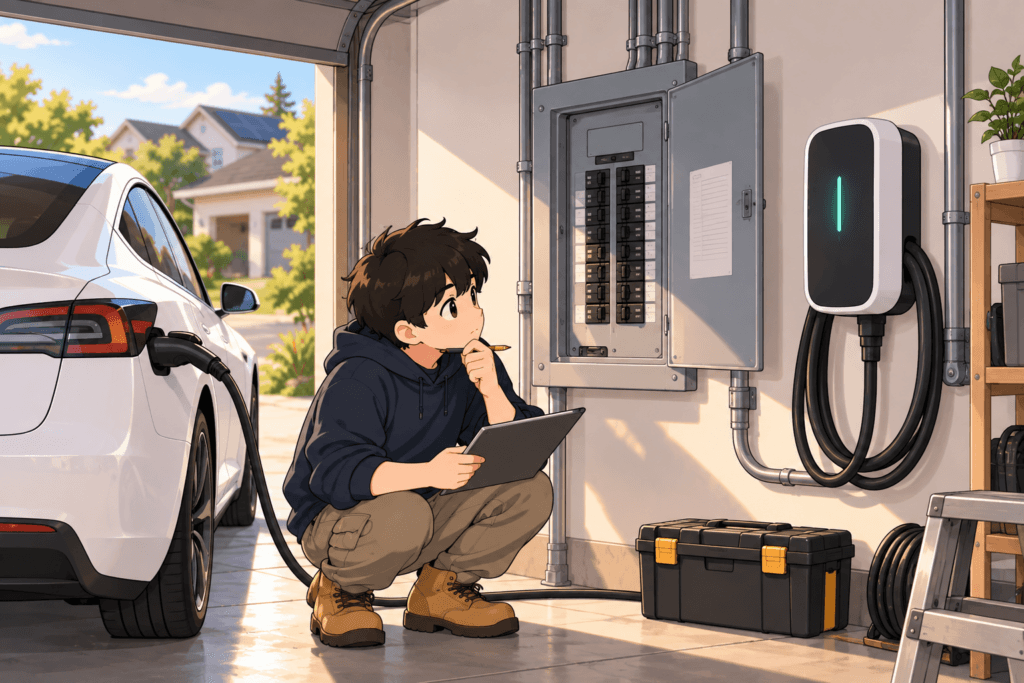
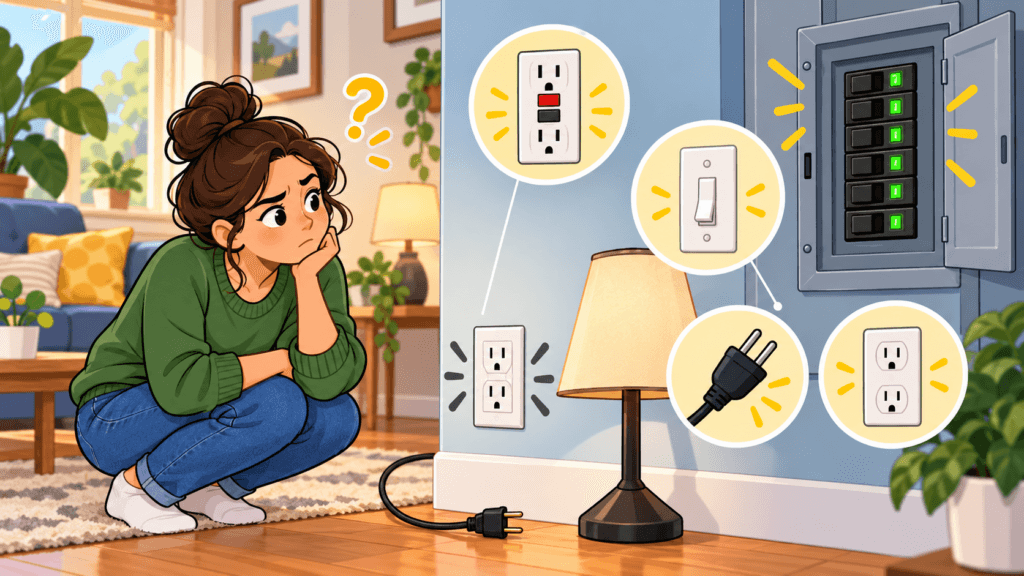
A circuit breaker is designed to trip when it detects an unsafe electrical condition.
So if a breaker trips once, that does not automatically mean the breaker is bad.
The real problem could be an overloaded circuit, short circuit, ground fault, damaged appliance, or wiring issue.
However, breakers can also become damaged or fail.
A circuit breaker should be evaluated for replacement when it repeatedly trips without an identifiable circuit problem, will not reset properly, overheats, buzzes, shows physical damage, or fails its built-in TEST function.
Here are seven signs worth paying attention to.
1. The Breaker Keeps Tripping
Frequent tripping is one of the most obvious warning signs.
But it is also one of the easiest symptoms to misdiagnose.
ESFI notes that frequent breaker trips can indicate an overloaded or otherwise problematic electrical system and recommends having the cause investigated by a qualified electrician.
Before blaming the breaker, consider whether the circuit is supplying too much equipment.
For example, a space heater, microwave, hair dryer, or other high-power appliance can overload a branch circuit.
If the circuit load and wiring have been checked and the breaker continues to trip unexpectedly, the breaker itself may become a suspect.
Schneider Electric also notes that when overloads and connection problems have been ruled out, internal breaker problems can justify replacement.
2. The Breaker Will Not Reset
A tripped breaker normally needs to be moved fully to OFF before being switched back ON.
If it immediately trips again, do not keep resetting it repeatedly.
The breaker may simply be doing its job because a fault still exists.
ESFI recommends unplugging or turning off loads before resetting a tripped breaker and contacting an electrician if the problem continues.
A breaker that physically will not remain in the ON position should be investigated rather than forced.
The underlying circuit problem needs to be ruled out before assuming replacement is the solution.
3. The Breaker or Panel Is Unusually Hot
Electrical equipment can become warm under load, but unusual heat is a warning sign.
Overheating may result from:
- Loose electrical connections
- High-resistance connections
- Damaged breaker contacts
- Excessive current
- Busbar damage
Schneider Electric specifically recommends checking for discoloration, melted insulation, odors, and other signs of overheating when investigating breaker problems. Severe heat damage may require replacement of the breaker and possibly other damaged panel components.
If you notice significant heat, burning odors, or discoloration around the panel, stop treating the issue as a simple nuisance trip.
4. You Hear Buzzing or Crackling
A normal breaker should not produce persistent buzzing, crackling, or sizzling sounds.
ESFI lists unusual electrical sounds such as buzzing and sizzling among the warning signs that should prompt professional inspection.
A sound coming from the panel could indicate:
- A loose connection
- Arcing
- Damaged contacts
- Overheating
- Another panel problem
Do not remove the panel cover to investigate energized components yourself.
The service panel contains parts that can remain energized even when individual branch breakers are turned off.
5. There Is Visible Damage
A breaker should be inspected if you see:
- Burn marks
- Melted plastic
- Corrosion
- Cracks
- Discoloration
- Physical deformation
Sometimes the breaker is not the only damaged component.
A poor connection between a plug-on breaker and the panel bus can create heat and damage both surfaces.
Schneider Electric advises inspecting the bus for pitting or discoloration when overheating occurs and replacing affected equipment when damage is present.
This is why replacing only the breaker without checking the panel connection can miss part of the problem.
6. An AFCI or GFCI Breaker Fails Its TEST Button
Some breakers provide more than ordinary overcurrent protection.
AFCI breakers detect dangerous arcing conditions, while GFCI devices protect against ground-fault shock hazards.
These breakers usually have a TEST button.
ESFI recommends testing AFCIs monthly. If an AFCI does not trip when the TEST button is pressed, it should be replaced by a qualified electrician.
The same basic principle applies to GFCI protection: if the test or reset function does not operate correctly, the protective device should be replaced.
A breaker that cannot perform its safety function should not simply be left in service.
7. The Breaker Has Been Damaged by a Serious Fault
A breaker is designed to interrupt dangerous current, but severe electrical faults can damage equipment.
After a major short circuit, overheating event, water intrusion, or visible panel damage, the breaker and its connection to the panel may need professional inspection.
The important question is not simply whether the breaker can still be switched ON.
It is whether the device can still reliably protect the circuit the next time something goes wrong.
Does an Old Circuit Breaker Automatically Need Replacement?
Not necessarily.
I would not replace a circuit breaker solely because someone says, “That panel is old.”
Age is worth considering as part of the overall electrical system, but condition matters more.
ESFI recommends professional electrical inspection for homes around 40 years old or older, as well as homes that have undergone major renovations or added significant electrical loads.
An older breaker that operates correctly may not need immediate replacement.
An apparently newer breaker showing heat damage or failing its TEST function is a different story.
My View From the Electrical Construction Side
From my experience working around electrical construction, I think one of the biggest mistakes is assuming:
“The breaker keeps tripping, so I need a bigger breaker.”
That can be dangerous.
A breaker is selected to protect the conductors and equipment connected to the circuit.
Installing a higher-amperage breaker without confirming that the wiring is designed for it can remove important overcurrent protection.
ESFI specifically advises replacing breakers with the correct size and amperage.
So when a breaker repeatedly trips, I would first ask why it is tripping.
If the breaker is correctly protecting an overloaded circuit, replacing it will not solve the actual problem.
If the wiring and load are normal but the breaker continues behaving incorrectly, then replacement becomes much more reasonable.
Final Thoughts
A circuit breaker may need replacement when it:
- Trips repeatedly after other problems have been ruled out
- Will not reset properly
- Becomes unusually hot
- Buzzes or crackles
- Shows burn marks or physical damage
- Fails an AFCI or GFCI TEST
- Has been damaged during a serious electrical fault
But remember:
A tripping breaker is not automatically a bad breaker.
The breaker may be warning you about another electrical problem.
The safest approach is to identify the cause first and replace the breaker only when the device itself is defective, damaged, or no longer performing its protective function.
And never install a larger breaker simply to stop a circuit from tripping.
Is there something you’d like to see?
Suggest an electrical topic, practical guide, or calculator you would like to see on JHOTAS-LAB. Your suggestion may help shape future content.