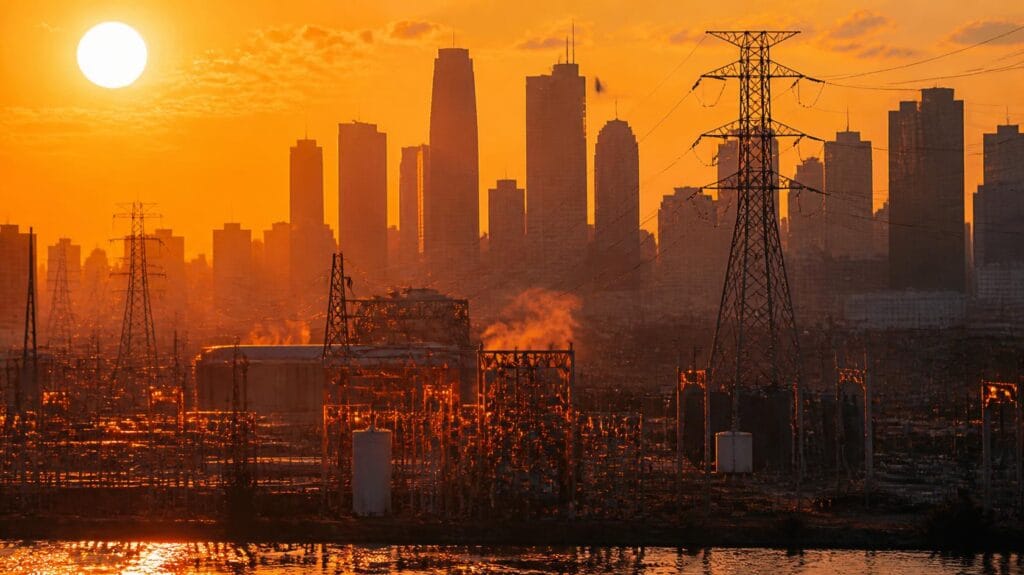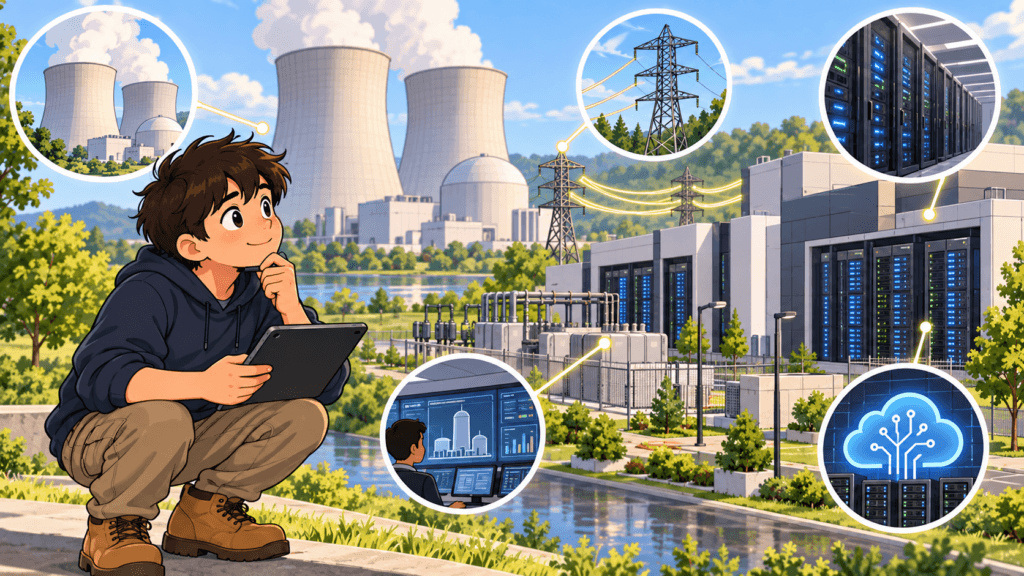
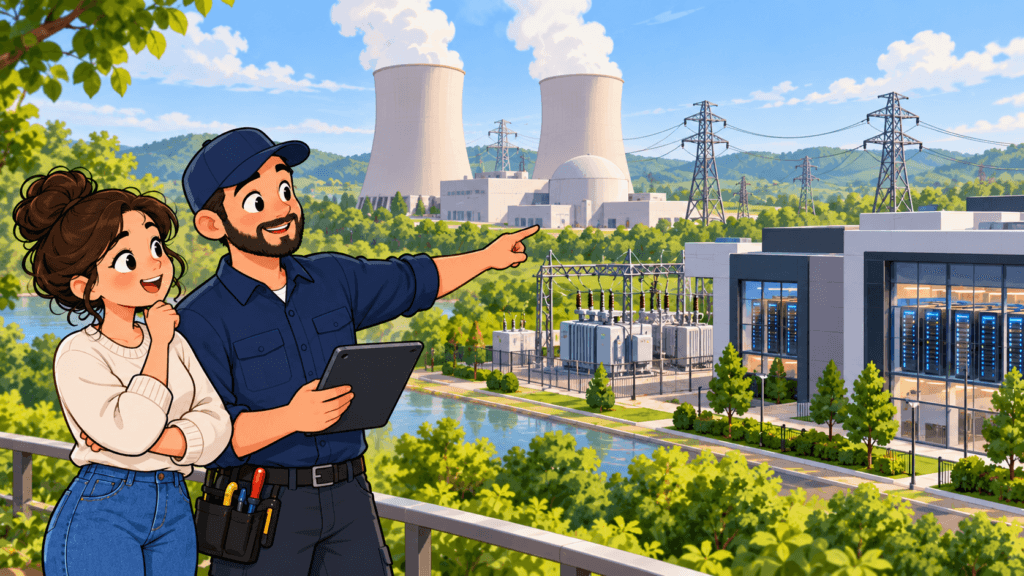
AI data centers are helping bring retired U.S. nuclear reactors back into the energy conversation—and in some cases, literally back online.
The reason is straightforward.
AI companies need enormous amounts of electricity, they need it 24 hours a day, and they increasingly want energy sources that can provide dependable power without adding large amounts of carbon emissions.
Two projects now make that trend especially clear:
Microsoft → Crane Clean Energy Center, 835 MW
Google → Duane Arnold Energy Center, 615 MW
Both involve nuclear plants that had previously shut down and are now being prepared for potential restart, subject to regulatory approval.
This does not mean every retired nuclear plant is coming back because of AI.
But data center demand has dramatically changed the economics of keeping—and restarting—nuclear generation.
AI Is Creating a New Electricity Demand Problem
The scale of U.S. data center electricity demand is changing quickly.
The U.S. Department of Energy estimates that data centers consumed about 4.4% of U.S. electricity in 2023.
By 2028, that share could rise to approximately 6.7% to 12%, with total annual data center electricity consumption potentially reaching 325 to 580 TWh.
AI is a major part of that growth.
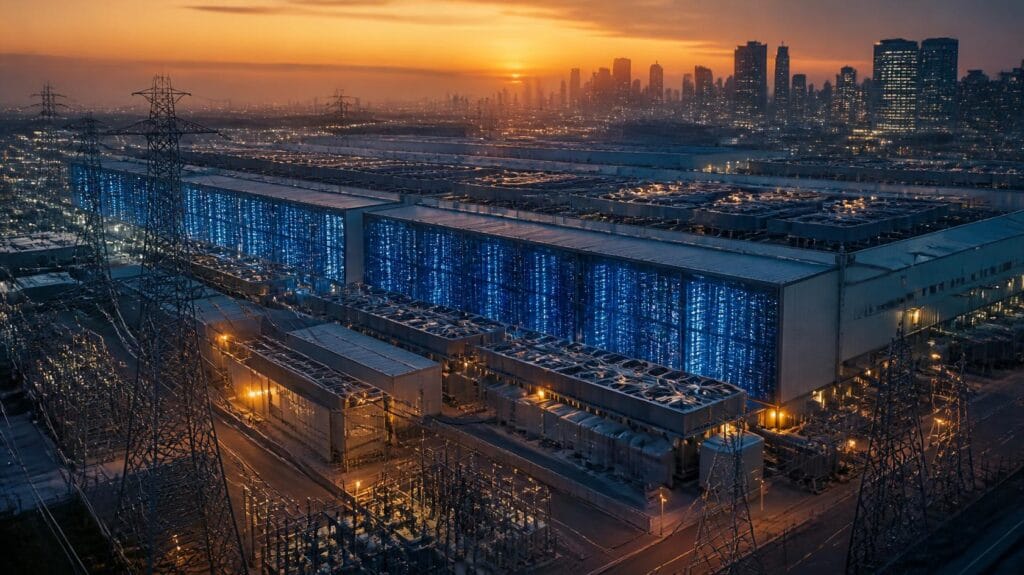
Large AI facilities contain thousands of high-performance GPUs as well as cooling systems, networking equipment, UPS systems and power-conversion equipment.
A large hyperscale campus can therefore require hundreds of megawatts of continuous power.
And that creates a problem that solar or wind alone cannot always solve.
Why Nuclear Fits AI Data Centers So Well
AI data centers do not simply need a lot of electricity.
They need electricity consistently.
Nuclear plants are designed to produce large amounts of steady power around the clock.
That gives nuclear several characteristics that are attractive to hyperscale technology companies:
- Large-scale output
- 24/7 generation
- Low operational carbon emissions
- Existing grid connections
- Predictable long-term production
- Ability to support growing regional electricity demand
Solar and wind remain important, but their output changes with weather and time of day.
Battery storage can help move renewable electricity between hours, but providing hundreds of megawatts continuously for large AI campuses requires enormous storage capacity.
Nuclear offers something different:
firm power.
That is becoming increasingly valuable as AI electricity demand rises.
Microsoft Is Helping Restart Three Mile Island Unit 1
The most famous example is Pennsylvania’s former Three Mile Island Unit 1, now renamed the Christopher M. Crane Clean Energy Center.
The reactor stopped operating in 2019 for economic reasons.
In 2024, Constellation signed a 20-year power purchase agreement with Microsoft, supporting a plan to restart the plant.
Crane would return approximately 835 MW of carbon-free generation to the grid, with Microsoft purchasing its energy to help match electricity consumed by its PJM-region data centers.
Importantly, this is not the reactor involved in the 1979 Three Mile Island accident. Unit 1 was a separate reactor that continued operating for decades afterward.
The restart still requires NRC approval.
As of 2026, the Nuclear Regulatory Commission has established a dedicated restart panel and continues licensing reviews, inspections and safety oversight.
Constellation now says the plant could potentially return to service as early as 2027, subject to required approvals.
Google Is Backing Another Nuclear Restart
Now there is another major example.
Google and NextEra Energy have signed a 25-year agreement supporting the restart of Iowa’s Duane Arnold Energy Center.
The 615 MW nuclear plant shut down in 2020.
If regulatory approvals are completed, NextEra expects it to return to service in the first quarter of 2029.
Google says the electricity will help support its growing cloud and AI infrastructure in Iowa.
And on September 8, 2026, the U.S. Department of Energy announced the financial close of an up to $1.9 billion loan to help finance the restart.
That makes the connection between AI and nuclear much harder to dismiss as hype.
We now have major technology companies signing decades-long contracts that help make retired nuclear plants financially viable again.
Why Restart Old Nuclear Plants Instead of Building New Ones?
This is perhaps the most interesting part.
AI companies need power relatively soon.
Building an entirely new large nuclear power plant can take many years.
Even advanced reactors and SMRs still have licensing, manufacturing, construction and supply-chain challenges to overcome.
But a retired nuclear plant may already have:
a reactor site
transmission connections
switchyards
grid infrastructure
experienced workforce
existing permits and facilities
A restart is still extremely complicated and expensive—but potentially faster than starting from an empty site.
Google itself described restarting an existing nuclear plant as one of the fastest paths to unlocking large-scale nuclear energy for near-term AI growth.
That explains why old nuclear assets suddenly look much more valuable.
It Is Not Just About Restarting Plants
The AI-nuclear trend is much broader.
Meta announced nuclear agreements in 2026 that could support up to 6.6 GW of existing and advanced nuclear capacity by 2035.
Its agreements include support for existing Vistra nuclear plants as well as future advanced-reactor projects from Oklo and TerraPower.
So Big Tech is effectively pursuing several strategies at once:
Restart retired reactors
Keep existing reactors operating longer
Increase output from current plants
Develop new advanced reactors and SMRs
That is important when thinking about where the nuclear market could go next.
But AI Is Not the Only Reason Nuclear Is Coming Back
This distinction matters.
It would be inaccurate to say every U.S. nuclear restart is happening because of AI.
For example, Michigan’s 800 MW Palisades Nuclear Plant is also being prepared for restart, but its project is primarily framed around grid reliability, firm generation and preserving nuclear capacity rather than a specific hyperscaler data center contract.
There is also stronger federal policy support for nuclear power and growing concern about overall electricity supply.
AI is therefore one major catalyst, not the only cause.
What AI has done is create a new class of customer willing to sign very large, very long-term power agreements.
That can fundamentally change the economics of nuclear plants.
What This Means From the Electrical Infrastructure Side
From my experience working in electrical construction, what interests me most is everything surrounding the reactor.
Returning 615 MW or 835 MW of generation to the grid involves much more than starting a turbine.
Projects can require work involving:
- Main transformers
- Switchyards
- Protection systems
- High-voltage equipment
- Transmission connections
- Control systems
- Cables and auxiliary systems
- Grid interconnection equipment
Constellation has specifically identified restoration work involving the turbine, generator, main power transformer, cooling systems and controls at Crane.
So the AI nuclear boom is also another form of the electrical infrastructure boom we’ve been seeing around data centers, transmission and battery storage.
Why SMRs Could Be the Next Chapter
Restarting retired plants can provide power sooner.
But there are only so many retired reactors available to restart.
That is where small modular reactors, or SMRs, become interesting.
Companies including Google, Amazon and Meta have already supported advanced nuclear projects as they look for additional firm electricity in the 2030s.
Meta’s 2026 agreements with Oklo and TerraPower are a good example: Big Tech is not simply buying today’s nuclear electricity—it is helping finance the next generation of nuclear capacity.
That does not guarantee every SMR company will succeed.
Licensing, construction costs, fuel supply and execution remain major risks.
But AI has created something the advanced nuclear industry badly needed:
large customers willing to commit to future electricity demand.
Final Thoughts
AI data centers are helping revive U.S. nuclear power because they need something increasingly difficult to find:
huge amounts of reliable electricity, available around the clock, for decades.
Microsoft is supporting the potential restart of the 835 MW Crane Clean Energy Center.
Google is backing the restart of the 615 MW Duane Arnold Energy Center, which just received federal financing support of up to $1.9 billion.
At the same time, Meta and other technology companies are supporting existing reactors and new advanced nuclear projects.
That suggests the bigger story is no longer simply:
“Can nuclear power make a comeback?”
The more interesting question may now be:
“How much nuclear capacity will AI companies be willing to finance to secure the electricity they need?”
Is there something you’d like to see?
Suggest an electrical topic, practical guide, or calculator you would like to see on JHOTAS-LAB. Your suggestion may help shape future content.