Updated September 9, 2026.
Extreme heat has repeatedly pushed parts of the U.S. power grid into tighter operating conditions during 2026.
That does not mean a nationwide blackout is about to happen.
One recent example occurred in the PJM Interconnection region, which serves all or parts of 13 states and Washington, D.C.
On September 1, 2026, the U.S. Department of Energy issued emergency Order No. 202-26-41 after PJM warned that hot weather, generation outages, electricity exports, and transmission constraints could increase reliability risks.
PJM’s application cited electricity demand of around 152,000 MW or higher and approximately 15,000 MW of generation outages during the expected conditions.
The DOE order temporarily allowed PJM to dispatch specified generation and, if necessary, use backup generation at large loads as an additional reliability tool.
That order was temporary and expired at 11:59 p.m. ET on September 8, 2026.
So this article should not be read as saying that a blackout is currently occurring. The more important question is what these emergency measures tell us about the grid when extreme heat, high demand, equipment outages, and growing electricity loads happen at the same time.
Why Heat Waves Put So Much Pressure on the Grid
The main reason is simple.
Air conditioners run almost everywhere at the same time.
Residential cooling loads rise.
Commercial buildings increase HVAC usage.
Industrial facilities continue operating.
Data centers keep consuming large amounts of electricity.
The U.S. Energy Information Administration expected summer electricity demand in 2026 to increase compared with 2025.
A few percentage points may not sound significant, but power systems are especially sensitive during peak demand periods.
The problem is not average electricity use.
It is the highest demand that occurs during a short period of time.
A grid can operate normally for most of the day and still face serious stress for several hours in the late afternoon.
Texas Already Set a New Electricity Demand Record
Texas is a good example.
On July 22, 2026, electricity demand in the ERCOT grid reached approximately 91.1 GW, setting a new record.
The peak occurred around 6 p.m. during extremely hot weather.
That timing is important.
Solar generation can be very strong during the day, but residential and commercial cooling demand can remain high into the evening.
The grid therefore has to manage a rapidly changing mix of generation while demand remains elevated.
This does not automatically mean the system will fail.
But it shows how large modern electricity peaks are becoming.
👉 This evening transition is also one reason battery storage is expanding so quickly. See Why Is Battery Energy Storage Growing So Fast in the U.S.? for a closer look at the grid-side role of batteries.
The U.S. Grid Is Not Collapsing
There is also positive news.
Reliability assessments for 2026 showed that new solar generation, battery storage, and other generation resources improved reserve conditions in several regions.
Under normal summer conditions, most U.S. regions are expected to have enough electricity resources.
That point matters.
I do not think it is accurate to say that the U.S. power grid is simply running out of electricity.
The real risk appears when several problems overlap.
For example:
Extreme heat increases demand.
A major generator unexpectedly goes offline.
Transmission capacity becomes constrained.
Renewable generation falls during certain hours.
Large industrial or data-center loads continue operating.
Each problem may be manageable by itself.
But when several happen together, the safety margin becomes much smaller.
My View as Someone Working in the Electrical Field
Working around electrical construction, I think people often focus too much on one question:
“Is there enough generation capacity?”
In my opinion, that is only half of the story.
Electrical systems are also about timing, capacity, protection, and reserve margin.
Even a building can have enough electrical capacity under normal conditions but experience problems when several large loads operate at the same time.
The national grid is obviously far more complex, but the basic principle is similar.
Peak load matters more than average load when the system is close to its limit.
That is why I find the recent U.S. situation interesting.
I do not believe a nationwide blackout is suddenly imminent.
What concerns me more is that extreme weather can reduce the grid’s room for error very quickly.
If emergency generation or special operating procedures are repeatedly needed during severe heat waves, that is something worth watching.
Data Centers Could Add Another Layer of Pressure
Another major factor is rapidly growing electricity demand from data centers.
AI computing, cloud infrastructure, semiconductor manufacturing, and other large industrial projects are creating new electrical loads in several U.S. regions.
Unlike residential air conditioning, many data centers operate continuously.
That changes the problem.
A household may increase electricity consumption dramatically during a hot afternoon and then reduce consumption later.
A large data center can consume hundreds of megawatts for long periods.
When large continuous loads are combined with extreme summer cooling demand, less unused capacity may be available during emergencies.
This is likely to become one of the biggest U.S. electricity issues over the next several years.
What Happens Before a Blackout?
A blackout is not usually the first step.
Grid operators have several options before reaching that point.
They can dispatch additional generators, increase imports, activate demand-response programs, postpone maintenance, use backup generation, or ask large electricity consumers to reduce load.
These emergency measures are designed to prevent widespread outages.
So when an emergency alert is issued, it does not necessarily mean a blackout is coming.
It means the grid is operating under tighter conditions than normal.
How Can You Check Power Outages in Your Area?
A regional grid warning does not necessarily mean that your neighborhood has lost power.
For a local outage, the best source is usually your electric utility’s official outage map, because utilities track individual distribution outages and estimated restoration times.
Regional grid operators provide a different type of information.
- PJM region: Check PJM’s Emergency Procedures page for current regional alerts, warnings, and emergency actions.
- Texas: Check ERCOT for system-wide grid conditions. For neighborhood outages, use the outage tracker operated by your local transmission and distribution utility, such as Oncor or CenterPoint Energy where applicable.
- Other states: Look at your electric bill to identify the utility that physically delivers electricity to your home, then use that utility’s official outage map or mobile app.
PJM alerts describe conditions affecting the regional bulk power system; they are not the same thing as a street-level outage notice. PJM itself distinguishes between alerts, warnings, and emergency actions with different levels of urgency.
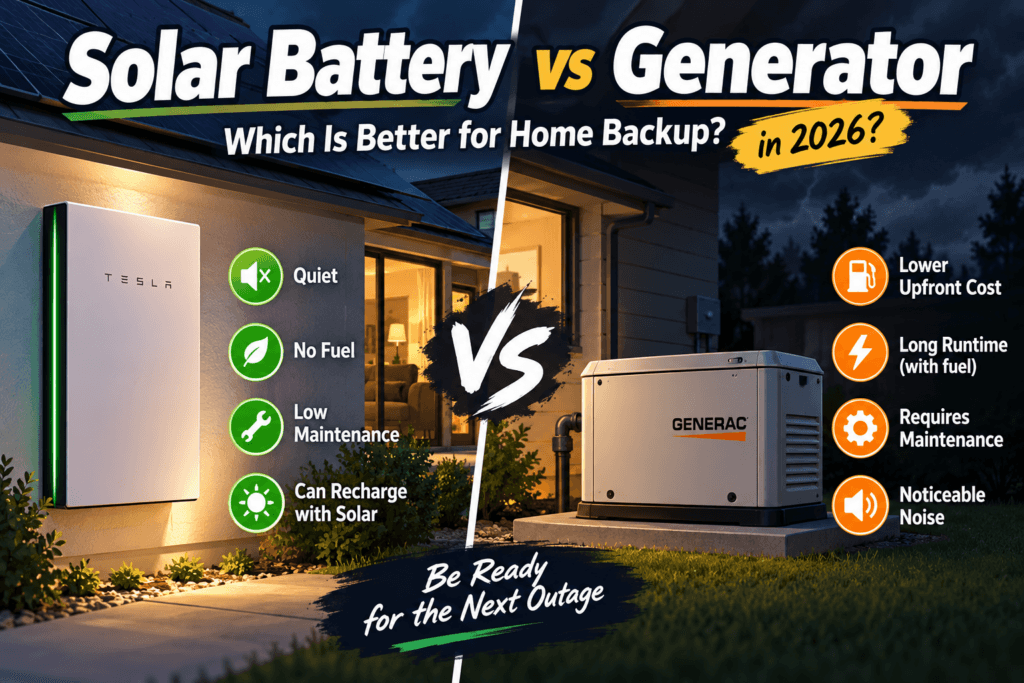
👉 If backup power is your main concern, Solar Battery vs Generator compares the cost, runtime, noise, maintenance, and long-outage advantages of both options.
Final Thoughts
The 2026 U.S. heat wave does not mean that a nationwide blackout is inevitable.
But it does show how quickly extreme heat can push electricity demand toward the limits of the system.
Texas has already set a new electricity demand record.
PJM and the Department of Energy used emergency reliability measures during several 2026 heat events, including a temporary September 1 DOE order that expired on September 8.
At the same time, electricity demand from cooling, data centers, and other large loads continues to grow.
For me, the real issue is not simply whether the United States can generate enough electricity on an average day.
It is whether the grid can maintain enough reserve capacity when extreme heat, high demand, generator outages, transmission constraints, and large new electrical loads happen at the same time.
That is where future blackout risk will be decided.
Is there something you’d like to see?
Suggest an electrical topic, practical guide, or calculator you would like to see on JHOTAS-LAB. Your suggestion may help shape future content.