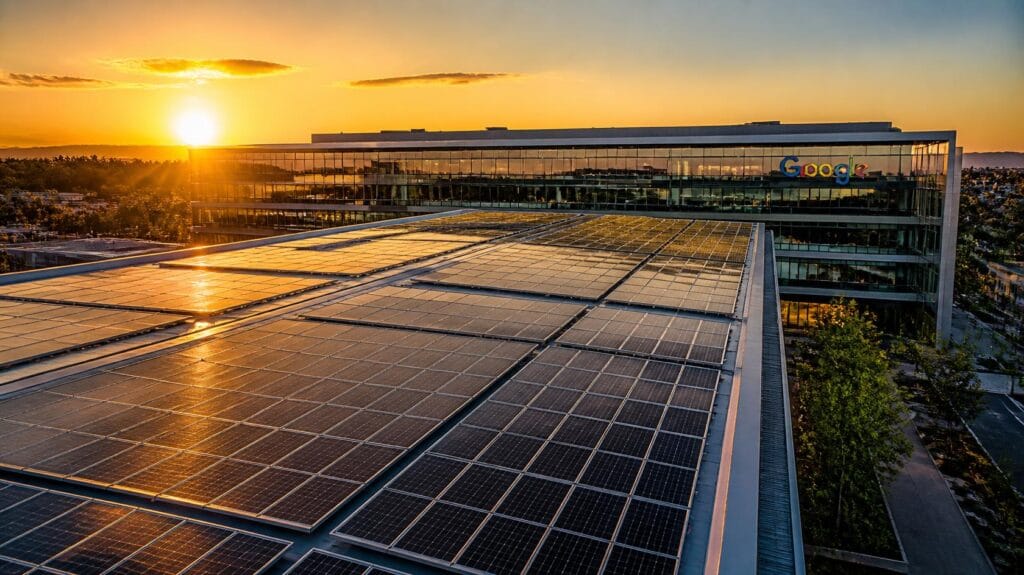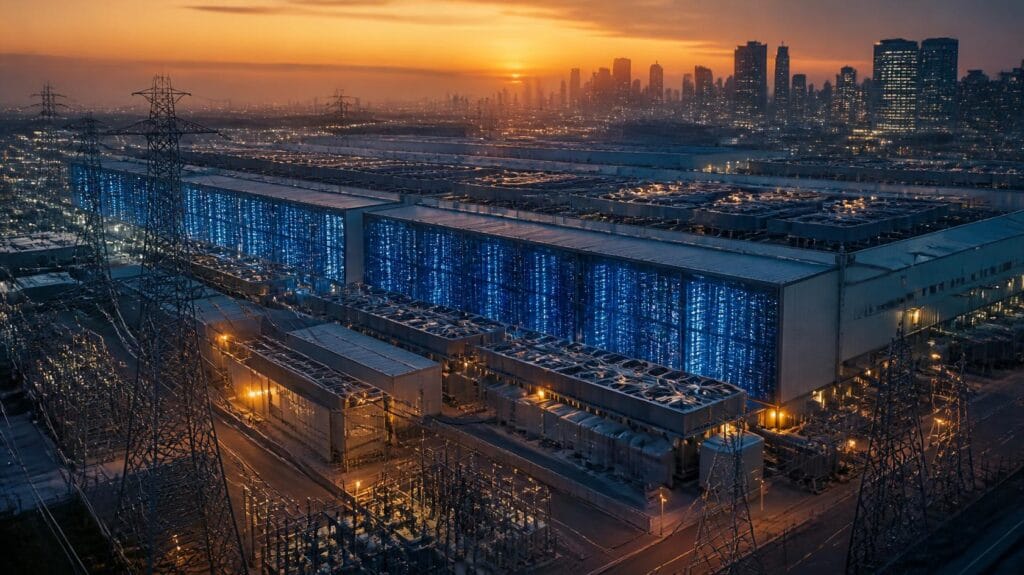

Texas is becoming one of the most important battlegrounds in America’s AI power boom.
The state is attracting large data centers that can require hundreds of megawatts — and in some cases more than a gigawatt — of continuous electricity.
That growth is now large enough to reshape how ERCOT, the operator of most of the Texas power grid, plans future electricity supply and transmission.
By February 2026, ERCOT was tracking more than 232 GW of proposed large loads in its interconnection process. About 72% — roughly 165 GW — were classified as data centers.
For perspective, ERCOT’s historical all-time peak demand was about 85.5 GW.
Of course, that does not mean Texas will suddenly add 165 GW of real data center demand. Many projects may never be built.
But the size of the pipeline explains why Texas electricity planning has changed so dramatically.
1. AI Data Centers Use Enormous Amounts of Power
Traditional data centers were already large electricity consumers.
AI is pushing that requirement much higher.
Modern AI facilities contain enormous clusters of GPUs and other high-performance computing equipment that operate continuously.
The servers themselves consume power, but so do:
- Cooling systems
- Pumps
- UPS systems
- Power conversion equipment
- Networking equipment
- Lighting and auxiliary systems
Large AI campuses are increasingly discussed in hundreds of megawatts rather than tens of megawatts.
Some proposed U.S. campuses now exceed 1 GW.
That is essentially utility-scale electrical demand concentrated at one location.
2. Texas Has Become a Major Destination for Large Data Centers
Texas offers something AI infrastructure developers desperately need:
scale.
Large sites can be combined with new substations, transmission infrastructure, renewable generation, battery storage, or dedicated natural-gas generation.
Texas also has a large competitive electricity market and significant natural gas, wind, and solar resources.
Reuters has noted that Texas continues to attract energy investment partly because of its investor-friendly power-market structure, while developers increasingly prioritize one thing above almost everything else:
time to power.
For a data center operator, having inexpensive land is useful.
But land without electricity is almost worthless.
A hyperscale AI facility cannot operate until hundreds of megawatts of dependable power are available.
3. ERCOT’s Large-Load Queue Has Exploded
The numbers show how quickly the situation has changed.
ERCOT reported that its large-load interconnection pipeline had exceeded 232,000 MW by early 2026, compared with only a fraction of that several years earlier.
Data centers represented the dominant category.
The pressure continued growing during the year.
By August, Texas Governor Greg Abbott said ERCOT was considering more than 474 GW of connection requests, more than five times ERCOT’s record peak demand. The state ordered an audit and verification process before data center projects could advance through the connection process.
That tells us something important:
The problem is no longer simply finding enough generation.
Texas must determine which projects are real, where they should connect, and what transmission upgrades would be required.
4. Grid Connections Are Becoming the Bottleneck
Building the data center itself can sometimes happen faster than expanding the electric grid serving it.
Transmission lines, substations, transformers and generating plants can require years of planning, permitting and construction.
Texas is already planning major transmission investment.
Reuters reported that ERCOT faces tightening supply margins while the state works toward a roughly $33 billion transmission expansion, including more than 2,400 miles of 765-kV transmission infrastructure. Much of that expansion will not be fully available until around 2030 or later.
Meanwhile, AI companies want power much sooner.
That timing mismatch is creating a new energy strategy.
5. Data Centers Are Starting to Bring Their Own Power
One of the most interesting developments in Texas is the growth of behind-the-meter generation.
Instead of waiting years for a full grid connection, some developers are building generation directly beside their data centers.
More than 30 GW of behind-the-meter power projects were announced in Texas between 2024 and early 2026, according to Reuters. Natural gas has been a major part of those plans, often combined with batteries or renewable energy.
The concept can look something like this:
Gas generation + solar/wind + battery storage → data center
with the ERCOT grid providing another connection where possible.
This could become increasingly common because data center developers care enormously about reliability.
An AI facility worth billions of dollars cannot simply shut down every time the grid becomes constrained.
6. Texas Is Now Tightening the Rules
The rapid growth has created another problem:
not every proposed data center is necessarily real.
Developers can submit large electricity requests long before financing, customers, land or construction plans are fully secured.
That can create what the industry increasingly calls “ghost demand.”
In September 2026, Reuters reported that Texas had paused the advancement of new data center grid connections while officials verify project ownership, funding and credibility. Similar concerns are emerging elsewhere in the United States.
ERCOT has also introduced a new Batch Zero process for large loads of 75 MW or greater.
Instead of evaluating huge projects individually, ERCOT can analyze groups of projects together and determine how much demand the grid can realistically support and where transmission upgrades are needed.
So the huge queue should not be interpreted as a forecast that every project will be completed.
It is better viewed as evidence of the extraordinary competition for Texas electrical capacity.
What This Means for the Texas Power Grid
Data centers are changing grid planning in several ways.
Texas will likely need more:
- Power generation
- High-voltage transmission
- Utility substations
- Large transformers
- Switchgear
- Battery energy storage
- Backup generation
- Demand-response capability
Senate Bill 6 also gives Texas new tools for managing very large loads during grid emergencies, including mechanisms that can require certain large users to reduce consumption under specific conditions.
That means future data centers may increasingly need to become flexible grid participants, not simply customers demanding electricity 24/7.
My View From the Electrical Construction Side
From my experience working in electrical construction in South Korea, the most interesting part of this story is not actually the servers.
It is everything required before electricity ever reaches those servers.
A 500 MW or 1 GW data center campus can require enormous amounts of electrical infrastructure:
substations, transformers, switchgear, protection systems, high-voltage cables, backup generation, battery systems and transmission connections.
That is why I see the AI data center boom as an electrical infrastructure boom as much as a technology boom.
The question for Texas is becoming less:
“How many data centers want to build here?”
and more:
“How many can the electrical system realistically power?”
Final Thoughts
Texas data center electricity demand is surging because AI computing requires enormous amounts of continuous power and developers are racing to secure electrical capacity.
But 2026 has also exposed the limits of that growth.
ERCOT is facing hundreds of gigawatts of connection requests, transmission construction takes years, and regulators are now trying to separate realistic data center projects from speculative demand.
That creates one of the most important energy stories to watch in the United States:
AI growth may ultimately be limited not by chips or buildings — but by how quickly the power system can expand around them.
Is there something you’d like to see?
Suggest an electrical topic, practical guide, or calculator you would like to see on JHOTAS-LAB. Your suggestion may help shape future content.